
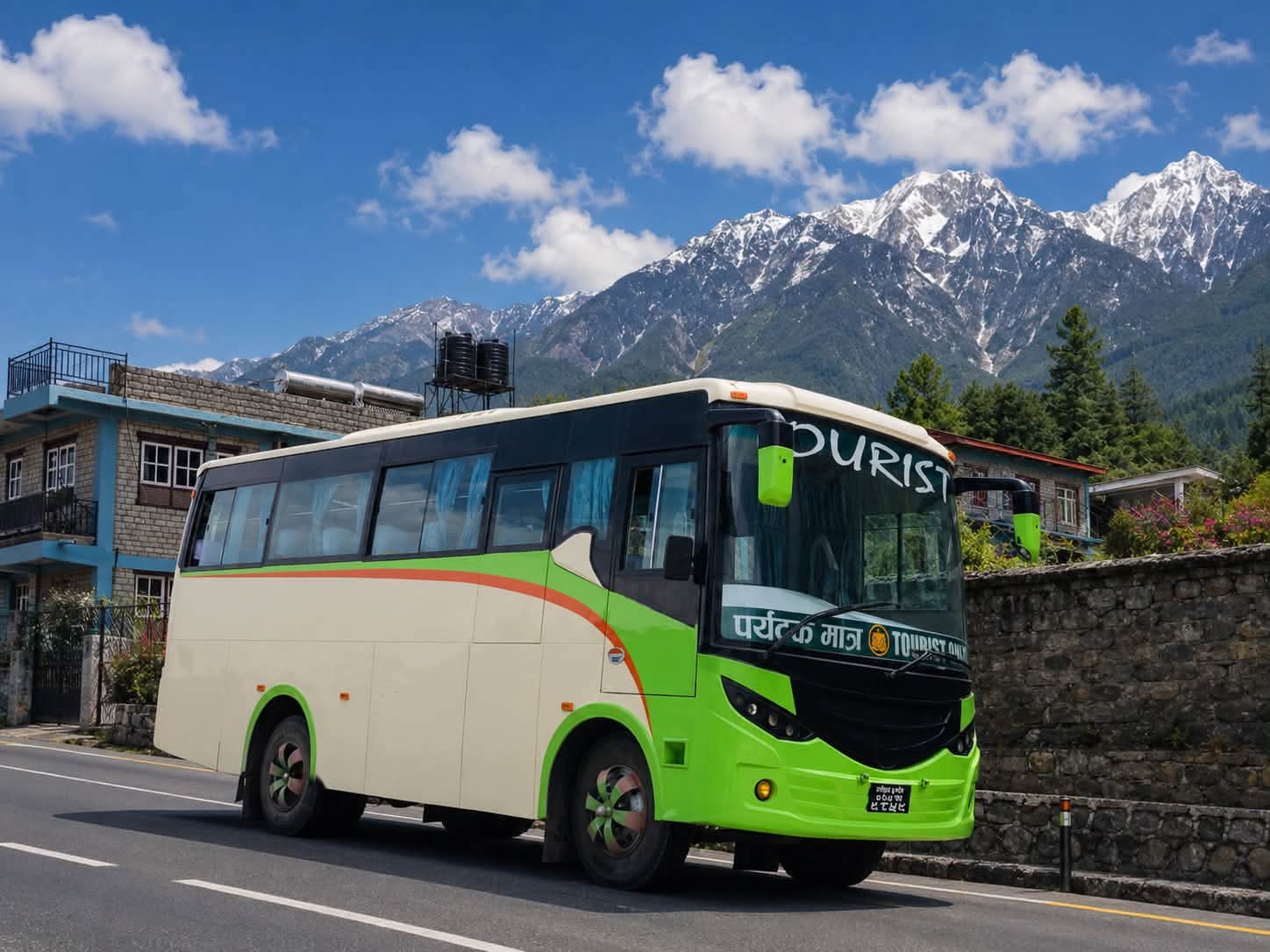
Trip at a Glance
|
Detail |
Info |
|
Distance |
~175 km |
|
Travel Time |
5–7 hours |
|
Route |
Kathmandu → Naubise → Malekhu → Mugling → Dumre → Besisahar |
|
Vehicle Options |
Sedan, SUV, Scorpio Jeep, HiAce Van/Urbania, Coaster |
|
Driver |
Included |
|
Group Size |
1 to 12+ passengers, depending on vehicle |
|
Max Altitude |
~760 m (Besisahar bazaar) |
|
Best Season |
October–April (year-round with some monsoon delays) |
|
Departure |
Flexible — most guests leave early morning for a full day of travel |
Besisahar is the starting point for some of Nepal’s best-known treks — the Annapurna Circuit, Nar Phu Valley, and Tilicho Lake, with Manaslu Circuit trekkers often finishing their route here as well. Sitting on the banks of the Marsyangdi River, it’s less a tourist town in its own right and more a working trailhead — the last stop with reliable shops, guesthouses, and vehicle access before trekkers head into the hills.
The drive covers about 175 kilometers and takes 5 to 7 hours, following the same Prithvi Highway route used for Pokhara and Bandipur as far as Dumre, then turning north along the Marsyangdi valley for the final stretch. Car Rental Nepal runs private transfers to Besisahar daily — no shared seats, no waiting for a bus timetable, and a driver who takes you straight to your guesthouse or trailhead starting point.
Whether you’re beginning a multi-week trek or want to see the Annapurna foothills up close, we’ll get you there directly and on your own schedule.
Trip Highlights
- Private, door-to-door service — no shared seats or fixed bus schedule
- Scenic drive along the Trishuli and Marsyangdi Rivers
- Direct access to the Annapurna Circuit, Nar Phu Valley, and Tilicho Lake trailheads
- Optional stop at Manakamana Temple via cable car
- Suited to trekkers, small groups, and larger trekking parties alike
- Experienced drivers familiar with the narrower road beyond Dumre
Vehicle Options
We offer a range of vehicles for the Kathmandu–Besisahar route, based on your group size, luggage, and the narrower road conditions past Dumre:
- Comfort Sedan: Workable for the highway stretch, but the narrower, rougher road beyond Dumre makes this a less comfortable choice if you’re carrying trekking gear.
- SUV: A solid option for most travelers, offering more clearance and comfort on the Dumre–Besisahar stretch than a sedan.
- 4x4 Scorpio Jeep: The most practical choice for this route, especially with trekking packs, and the safer option during monsoon when the road can get muddy.
- Toyota HiAce Van: Fits up to 10–12 passengers with gear, a good fit for trekking groups traveling together.
- Coaster: For larger trekking groups of 20 or more, ideal for tour operators bringing a full team to the trailhead.
Quick capacity reference: Sedan (1–3), SUV / Scorpio Jeep (1–4), HiAce Van / Urbania (10–12), Coaster (20–30). If your group is larger than a HiAce or Urbania comfortably fits, a Coaster keeps everyone together in one vehicle.
Let us know your group size and gear load, and we’ll recommend the most practical option — this route rewards ground clearance more than most.
Kathmandu to Besisahar: Driving vs. Tourist Bus
There are three realistic ways to reach Besisahar from Kathmandu: a local or tourist bus, a private vehicle, or a short helicopter flight for those short on time.
- Local / Tourist Bus: The budget option. Buses leave from Gongabu (New Bus Park) and take 6 to 8 hours, with shared seating and a fixed departure time. It’s the cheapest way to get there, but there’s no door-to-door service and limited flexibility if your schedule changes.
- Private Car, Jeep, or Van: The direct option. Your driver takes you from your Kathmandu hotel straight to your guesthouse or the trailhead in Besisahar, with stops wherever you’d like along the way.
- Helicopter: The fastest option, at around an hour, but a premium price point and limited to booking with clear weather. Worth considering only if time is the priority over budget.
If you’re heading straight into a multi-day trek, a private vehicle avoids the extra fatigue of a long-shared bus ride the day before you start walking.
Road Condition, Section by Section
The drive to Besisahar has two very different stretches: a well-paved highway followed by a narrower mountain road.
Kathmandu to Dumre: the same route used for Pokhara and Bandipur
This stretch runs through Thankot, Naubise, Malekhu, and Mugling on the Prithvi Highway. The road is generally well-paved but busy, shared with buses, trucks, and private vehicles heading toward Pokhara, Chitwan, and Bandipur as well. Expect winding curves through the hills and occasional slower traffic near Naubise and Galchi.
Dumre to Besisahar: narrower and rougher
At Dumre, the route leaves the main highway and follows the Marsyangdi River north toward Besisahar. This stretch is noticeably narrower than the highway, with rougher patches in places, though it’s passable year-round with an experienced driver. This is the section where a Scorpio Jeep or SUV makes a real difference over a sedan, particularly if you’re carrying trekking gear or traveling during monsoon.
Suggested Stops Along the Way
- Naubise: A small roadside town about 45 minutes out of Kathmandu, often used as an early rest stop.
- Malekhu: Known across Nepal for fresh fish from the Trishuli River, and a popular lunch stop for travelers heading west.
- Kurintar (Manakamana Cable Car): For those with extra time, a stop here lets you ride the cable car up to Manakamana Temple, one of Nepal’s most visited pilgrimage sites, with wide hill views. This adds 2 to 3 hours to the trip.
- Mugling: The junction town where the Chitwan and Pokhara highways split, and a common spot for a tea break before continuing toward Dumre.
- Dumre: Where the route leaves the Prithvi Highway and follows the Marsyangdi River north. From here, the road narrows for the final stretch into Besisahar.
Your driver can adjust the pace based on your schedule, whether you want a direct run to make the most of daylight for trek preparations, or a slower day with stops along the way.
Kathmandu to Besisahar Driving Route
Kathmandu → Thankot → Naubise → Malekhu → Mugling → Dumre → Besisahar
This follows the Prithvi Highway for most of the journey, the same road used for trips to Pokhara, Chitwan, and Bandipur, before turning north at Dumre to follow the Marsyangdi River into Besisahar.
Door-to-Door Service
Pickup in Kathmandu
Your driver meets you right at your hotel doorstep, guesthouse, or Kathmandu Airport — no need to reach a bus park. We collect from all the main areas of the city, including Thamel, Lazimpat, Boudhanath, Patan, Bhaktapur, and the airport area. You choose the pickup time that works best, whether that’s an early departure to maximize daylight or a later, more relaxed start.
Drop-off in Besisahar
Your driver brings you directly to your guesthouse in Besisahar bazaar, or to the trailhead itself if you’re heading straight into the hills. Unlike Bandipur, there’s no vehicle restriction in town so that you won’t need a separate local transfer at the end of the drive.
Besisahar & Trekking Gateway Highlights
Besisahar itself is a working trail town rather than a tourist destination, but it’s the launch point for several major routes:
- Annapurna Circuit Trek: Besisahar is the traditional starting point for this classic multi-week trek around the Annapurna range.
- Nar Phu Valley Trek: A restricted, off-the-beaten-path route branching off the Annapurna Circuit, starting from the same trailhead.
- Tilicho Lake Trek: Explore one of the world's highest-elevation lakes, reached via the Annapurna Circuit route from Besisahar.
- Marsyangdi River: The river running through town is popular for rafting and kayaking for those looking to add an activity before or after trekking.
- Chandi Mai Temple: A local temple in Besisahar bazaar, worth a short visit if you have time before setting off.
We can also arrange onward jeep transport from Besisahar deeper into the Annapurna Circuit route, toward Chame or Manang, for trekkers looking to skip the lower sections on foot.
Why Rent a Private Vehicle
Buses to Besisahar are cheap, but the shared ride and fixed schedule can be a rough start to a multi-day trek. A private vehicle gives you more control before the harder part of your trip begins:
- Travel directly to your guesthouse or trailhead without a bus park transfer.
- Depart early to maximize daylight for trek preparations on arrival.
- Stop at Malekhu, Kurintar, or other points along the way without asking permission.
- Keep your trekking gear secure and organized in one vehicle for the whole trip.
- Arrive rested rather than fatigued from a long-shared bus ride.
Key Considerations
- The road narrows past Dumre. An SUV or Scorpio Jeep handles the Dumre–Besisahar stretch more comfortably than a sedan, especially with trekking gear.
- This is a working trail town, not a tourist stops. Besisahar has guesthouses and shops geared toward trekkers rather than resort-style tourism — expect a functional, practical base rather than a scenic destination in itself.
- Road conditions change with the season. The Prithvi Highway is officially recognized as landslide-prone, with the Malekhu–Mugling stretch seeing periodic monsoon blockages (June–September). Build in extra time if traveling during this period.
- Continuing your trip? Many travelers pair this with an onward transfer to Pokhara or a stop in Bandipur or Chitwan — just let us know when booking, and we’ll quote the full route together.
Best Time to Travel, Season by Season
- Spring (March–May): Clear skies and mild temperatures — a strong window for both the drive and the start of a trek.
- Summer / Monsoon (June–August): Green scenery but a higher chance of landslide-related delays on the highway. Build extra time into your schedule.
- Autumn (September–November): The most popular season for both driving and trekking — clear visibility and comfortable temperatures.
- Winter (December–February): Cool and quiet, with fewer crowds. Mornings are cold, so pack accordingly, especially if you’re continuing to higher elevations.
Good to Know
- Cash and cards: Besisahar has some banking services, but carry enough Nepali rupees for your stay and initial trekking expenses, since options thin out quickly once you’re on the trail.
- Permits: If you’re trekking onward, you’ll need your TIMS card and ACAP permit, which can typically be arranged in Kathmandu or at checkpoints along the route.
- Mobile network: Coverage in Besisahar bazaar is generally reliable, though it weakens as you head into the hills.
- Weather: Besisahar sits at a lower altitude (~760m) than the trek ahead, so it’s noticeably warmer than what you’ll experience later in the Annapurna Circuit.
- Tipping: Not required, but appreciated if your driver has gone out of their way to help — there’s no fixed amount, and it’s entirely up to you.
What’s Included and What’s Not
Included in your fare:
- Private vehicle and experienced driver for the full route
- Fuel, road tolls, and applicable taxes
- Airport or hotel pickup and drop-off in Kathmandu
- Direct drop-off at your guesthouse or trailhead in Besisahar
- Bottled water for the journey
- Standard waiting time at stops along the way (Malekhu, Kurintar, Dumre)
Not included:
- Meals and refreshments during stops
- Manakamana cable car tickets, if you choose to add that detour
- TIMS cards, ACAP permits, or other trekking permit fees
- Trekking guide or porter services
- Any accommodation in Besisahar or elsewhere.
- Tips or gratuities for your driver, which are always appreciated but never required
Landslides and Road Closures: Our Policy
The Prithvi Highway is one of Nepal’s busiest routes and, like most hill highways in the country, it’s prone to monsoon landslides, particularly on the Malekhu–Mugling stretch. The Dumre–Besisahar road can also be affected by heavy rain given its narrower, less-maintained surface. Most blockages are cleared within a few hours by road crews, but heavy or continuous rain can occasionally close a section for longer.
Here’s how we handle it:
- We monitor road conditions before every departure, especially during monsoon season (June–September).
- If a landslide or closure is reported on your route, we’ll contact you before pickup to discuss options — an adjusted departure time, an alternate route where one exists, or a rescheduled transfer.
- If you’re already on the road when a closure happens, your driver stays with you and follows updates from local authorities and road crews until traffic resumes.
- We don’t charge extra for delays caused by road closures beyond our control, and we’ll work with you on rescheduling if a closure means you can’t reach your destination as planned.
Traveling in the monsoon months doesn’t rule out a trip to Besisahar. A working phone number on your booking and a heads-up if your onward trekking schedule is tight are all we need from you — we’ll handle the rest.
Pricing / Vehicle Options
All rates are per vehicle, one-way, and include fuel, driver charges, and applicable tolls.
|
Vehicle |
Capacity |
Rate (USD) |
|
Comfort Sedan |
1–3 passengers |
90 |
|
SUV |
1–3 passengers |
95 |
|
4x4 Scorpio Jeep |
1–5 passengers |
125 |
|
Toyota HiAce Van |
10–12 passengers |
150 |
|
Coaster / Urbania |
12+ passengers |
200 |
Return transfers, multi-day packages, and group bookings for trekking teams are available on request — message us for a custom quote.
Why Choose Car Rental Nepal
- Fixed, transparent pricing: The rate you’re quoted covers the vehicle, fuel, driver, and tolls—no surprises at drop-off.
- Direct drop-off at the trailhead: No bus park transfer, no shared seating. Your driver takes you the whole way.
- Experienced mountain-road drivers: Our drivers are familiar with the narrower Dumre–Besisahar stretch and handle it safely year-round.
- Flexible scheduling: Leave early to maximize trekking prep time, and stop along the way if you’d like.
- 24/7 support: Our team is available by WhatsApp or phone throughout your trip.
How to Book
- Contact us: Reach out by WhatsApp, email, or phone with your travel date, pickup location, passenger count, and vehicle preference.
- Get a confirmation: We’ll confirm your vehicle, driver details, and pickup time.
- Meet your driver: Your driver meets you right at your hotel on schedule, ready to load your luggage and gear.
- Travel comfortably: Sit back for the 5–7-hour drive, with stops along the way if you’d like them.
Frequently Asked Questions
How long does the drive from Kathmandu to Besisahar take?
Around 5 to 7 hours by private vehicle. It can take longer during monsoon season or festival traffic, and the narrower road past Dumre naturally slows the pace.
Is the road to Besisahar safe?
Yes. The highway portion is a well-traveled paved road, and while the Dumre–Besisahar stretch is narrower and rougher, our drivers are experienced with this specific route.
Can I stop at Manakamana on the way?
Yes. Many travelers add a stop at Kurintar to ride the cable car up to Manakamana Temple. This adds roughly 2 to 3 hours to the trip, so let your driver know in advance.
What vehicle should I choose if I’m carrying trekking gear?
A Scorpio Jeep or SUV is the better choice over a sedan, given the narrower road and the extra clearance needed for loaded packs and duffels.
Can you take me further, to Chame or Manang?
Onward jeep transport beyond Besisahar is possible on request — let us know your planned route, and we can arrange it.
Do I need trekking permits before I arrive?
Yes, a TIMS card and ACAP permit are required for the Annapurna Circuit and related routes. These can usually be arranged in Kathmandu before you travel, or at checkpoints along the way.
Can I book a return transfer, or continue to Pokhara instead?
Yes to both. We can arrange a return transfer to Kathmandu, or an onward transfer to Pokhara, Bandipur, or Chitwan if you’re continuing your trip rather than backtracking.
How far in advance should I book?
We suggest reserving your place at least 24 hours in advance, and further in advance during peak trekking season (October–April) to guarantee vehicle availability.
Ready to book your Kathmandu to Besisahar transfer? Contact us today for a fixed quote and a direct ride to the trailhead.
WhatsApp / Viber: +977 9851186932 Email: info@carsrentalnepal.com